

You pull your hand away from your hair and pause. More strands than usual. On the pillow in the morning, wrapped around the comb after Fajr, piling up in the shower drain — it keeps happening.
The connection between stress and hair fall is real, it’s documented, and across Pakistan right now, it’s more common than most people realise.
The strange part is that it rarely happens during the stressful moment itself. Exam week ends, Ramadan passes, the deadline is submitted — and then, a month or two later, the shedding starts. By that point, you’ve moved on. So you blame the shampoo, the weather, the water. And none of that is really the cause.
Why Stress and Hair Fall Are Becoming More Common in Pakistan
Life in Pakistan has never been particularly low-pressure. But the combination of rising academic competition, economic instability, family expectations, and increasingly long working hours has created a sustained level of background stress that the body treats as a prolonged threat.
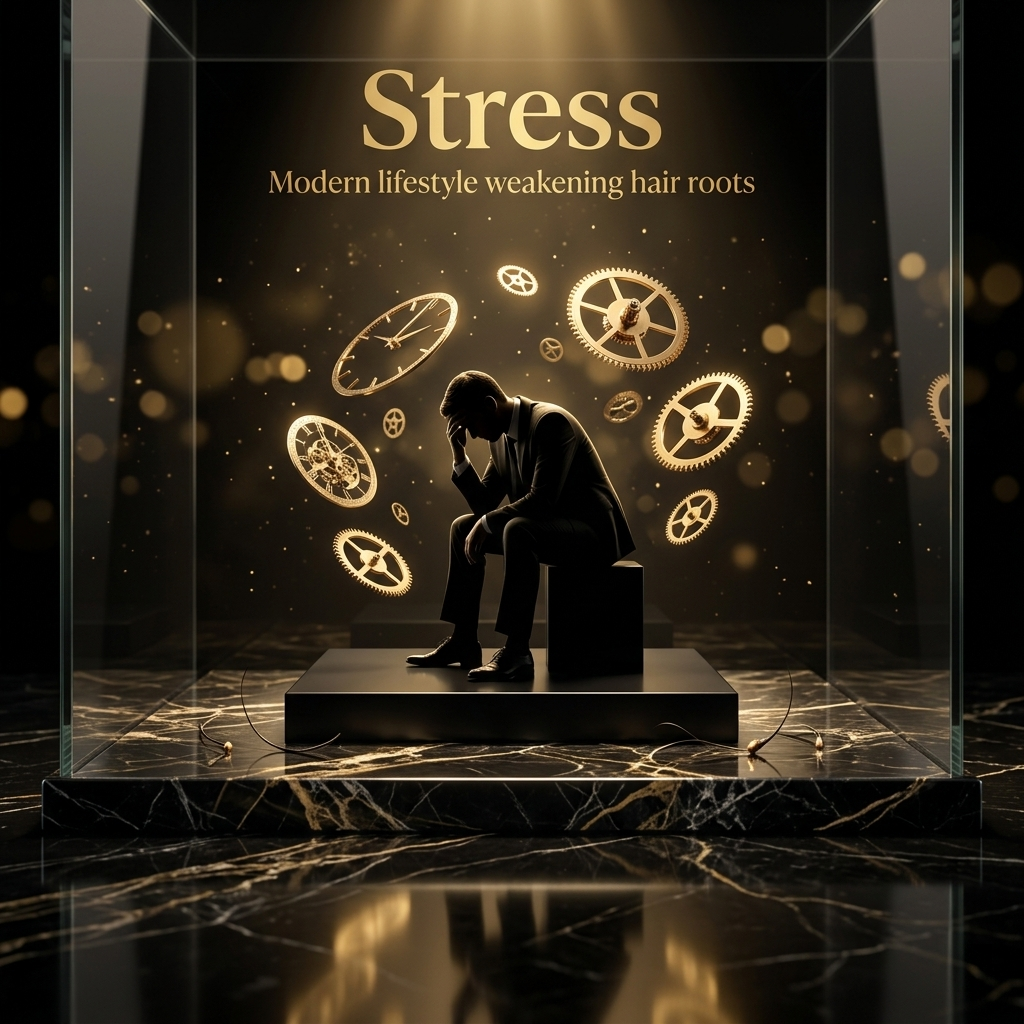
Academic, financial, and lifestyle pressures create sustained background stress.
- Academic pressure: Entry tests for medical, engineering, and business schools have become intensely competitive. The pressure to perform starts young and rarely fully lets up.
- Financial stress: Inflation, unemployment, and economic uncertainty affect families across all income levels. Financial anxiety is one of the most sustained forms of chronic stress.
- Long working hours: Office culture in Pakistan rarely rewards leaving on time. Long hours, commuting in traffic, and unclear work-life boundaries accumulate quietly over months.
- Family expectations: The weight of being responsible — to parents, siblings, a spouse, children — creates a kind of low-grade constant pressure that many people never name as stress at all.
All of these, sustained over time, affect the body’s hormonal balance in ways that eventually show up in the hair. Stress is not a soft issue. It has real, measurable biological effects — and the hair follicle is one of its earliest visible targets.
How Stress Affects the Hair Growth Cycle
Hair doesn’t just grow passively. It moves through a structured three-phase cycle — and stress has a specific, documented way of disrupting it.
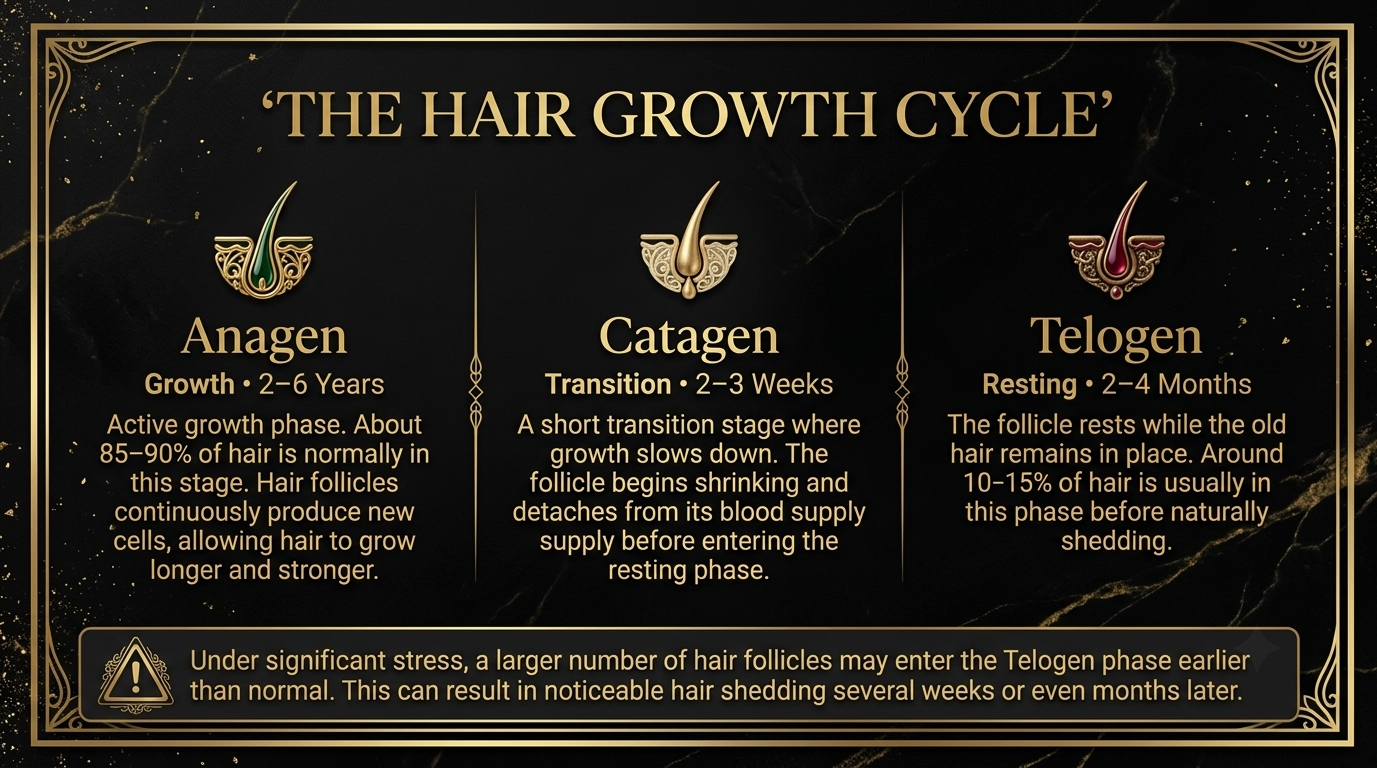
Stress disrupts the active growth phase, pushing follicles prematurely into resting and shedding stages.
Exam Stress and Hair Fall Among Pakistani Students
Matric and intermediate results, MDCAT, ECAT, NUST NET, FAST NU, IBA — the list of high-stakes exams in Pakistan seems to grow every year, and the competition around each one has intensified significantly.
A typical exam preparation cycle looks something like this: months of late nights, cups of chai replacing proper meals, sleep dropping to five or six hours, constant anxiety about what will happen if the result isn’t good enough. The body processes all of this as sustained physical and psychological stress.
Then the exam is over. A month or two later, the hair starts falling more noticeably — and the student, who has moved on mentally, has no idea why. The NHS notes that telogen effluvium typically begins two to four months after the triggering event, which is precisely why the connection gets missed.
The chai habit compounds things further. Excess caffeine disrupts sleep quality and can interfere with iron absorption — and low iron is one of the most documented nutritional contributors to hair fall, particularly in young women.
Work Pressure and Hair Fall in Pakistani Professionals
The stress doesn’t stop after graduation. For working professionals — whether in a Karachi office, a Lahore factory, or running a business in Faisalabad — the daily grind carries its own accumulation.
Long commutes, unclear job security, pressure to meet targets, the financial responsibility of supporting a family, and workplace cultures that rarely encourage setting limits — all of this adds up. The body doesn’t distinguish between exam anxiety and financial pressure. It registers sustained threat either way, and the hormonal response is the same.
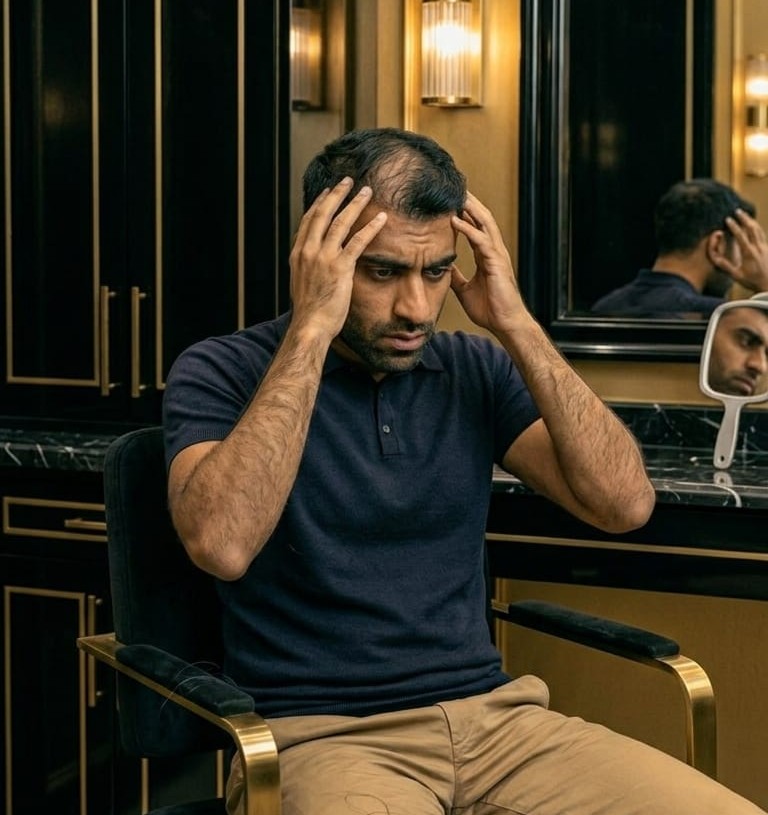
Sustained work pressure triggers elevated cortisol and physical strain.
Worth knowing: Cortisol — the body’s primary stress hormone — directly interferes with the anagen (active growth) phase of the hair cycle. Chronically elevated cortisol is one of the clearest biological links between sustained work pressure and increased hair shedding.
Poor Sleep and Hair Fall
Sleep is when the body does most of its repair work — including at the follicle level. Growth hormone is released primarily during deep sleep, and its role in supporting healthy hair growth is well-established.
Many people in Pakistan sleep late — whether from study schedules, work, or simply habits built around phone use and late-night socialising. Consistently sleeping five hours or less disrupts cortisol regulation, lowers growth hormone output, and creates a physiological environment where hair follicles are among the first structures to be deprioritised.
How Stress Changes Eating Habits — And What That Does to Hair
Under pressure, eating habits are usually the first thing to go. Skipping breakfast, relying on dhabas and roadside fast food, drinking four or five cups of chai a day with little actual food — this is the diet of a stressed Pakistani, and the hair suffers for it.
As Healthline highlights, iron deficiency, low vitamin D, and inadequate protein intake are three of the most commonly identified nutritional causes of hair shedding. All three become more likely when stress is high and meal quality is low.
Signs Your Hair Fall May Be Related to Stress
- A sudden, noticeable increase in daily shedding above your usual baseline.
- Hair appearing on pillowcases, clothing, and drains more than before.
- Diffuse thinning across the whole scalp — not in specific patches or along a defined hairline.
- Shedding beginning weeks or months after a stressful period, not during it.
- No significant scalp changes — no redness, flaking, or irritation accompanying the shedding.
- Hair fall worsening during or shortly after a demanding exam season, Ramadan, or a difficult work period.
Common Mistakes People Make When Hair Fall Starts
One of the biggest mistakes people make is panicking. They immediately start buying multiple products and changing routines every week.
- Switching products every few weeks: Changing shampoos, oils, and treatments constantly means nothing gets enough time to work.
- Following social media trends blindly: Rice water, onion juice, egg masks — many of these exist on TikTok, not in serious research.
- Expecting quick results: Hair grows roughly 1 cm per month. No product reverses three months of disruption in two weeks.
- Ignoring the stress entirely: Treating hair while the root cause continues is like mopping the floor with the tap still running.
Practical Ways to Manage Stress and Hair Fall
- Improve sleep quality and timing: Even shifting sleep one hour earlier and aiming for seven hours consistently can meaningfully change cortisol patterns.
- Eat proper meals — especially iron-rich foods: Daal, spinach, eggs, meat, lentils — Pakistan has excellent sources of iron and protein.
- Move the body daily: A 20–30 minute walk after Asr or Maghrib reduces cortisol over time.
- Manage time and set limits: Study or work in structured blocks rather than marathon sessions.
- Build a consistent scalp care routine: Gentle cleansing, scalp massage, and appropriate herbal nourishment. Consistency beats intensity every time.
Where Rami Hair Oil Fits into a Healthy Hair Care Routine
No oil solves stress-related hair fall on its own. That needs to be said clearly. But a carefully formulated herbal scalp oil, used consistently as part of a routine, genuinely supports the scalp environment during a difficult period — and that support adds up over time.
Rami Hair Oil is made using a slow cold infusion process — not heat-processed like most commercial oils — which means the herbs release their properties gradually into the oil blend without being degraded by temperature. The base oils include almond, coconut, castor, and kalonji (black seed), each chosen for what it specifically contributes to the blend.
The herbal infusion includes amla, fenugreek, bhringraj, and rosemary — traditional ingredients with long histories in South Asian hair care. Used two to three times a week with a gentle three to five minute scalp massage, it improves local circulation and supports a healthier root environment.
Frequently Asked Questions
Does exam stress cause hair fall in Pakistani students?
Yes — and the timing is what confuses most people. Exam stress can push hair follicles into a resting phase during the pressure period, but the shedding shows up two to four months later, long after results day.
Is the hard water in Pakistani cities a factor in hair fall?
Hard water can cause scalp buildup and make hair feel dry and brittle, contributing to breakage. But it doesn’t cause the kind of diffuse shedding associated with stress-related hair fall, though both issues can coexist.
How long does stress-related hair fall last?
Most people see shedding slow down three to six months after the underlying stress is resolved. Full recovery takes patience and continued focus on sleep, nutrition, and stress management.
Can drinking too much chai cause hair fall?
Chai itself isn’t the direct problem, but excess caffeine can disrupt sleep and interfere with iron absorption. Replacing proper meals with chai is the bigger issue.
How should I use Rami Hair Oil for best results?
Apply a small amount to the scalp two to three times per week. Massage gently for three to five minutes, leave on for at least thirty minutes before washing, and maintain consistency over eight to twelve weeks.
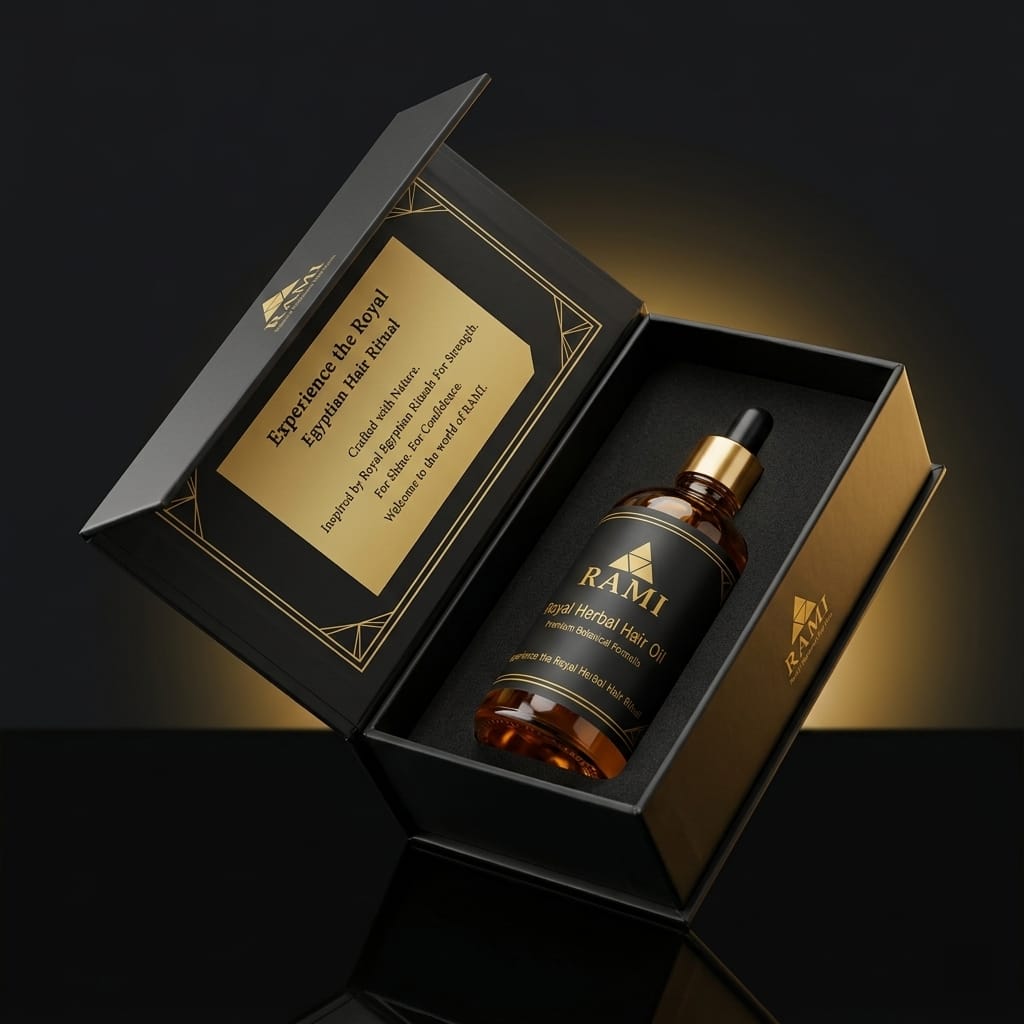
Rami Royal Herbal Hair Oil
₨2,999.00 ₨2,499.00
Cold-infused with precious herbs like bhringraj, amla, and rosemary to nourish your scalp, support follicle health, and combat stress-induced hair fall.
- Slow cold infusion traditional botanical formula
- Improves scalp circulation & root environment
- Kalonji, almond, amla, and bhringraj blend