
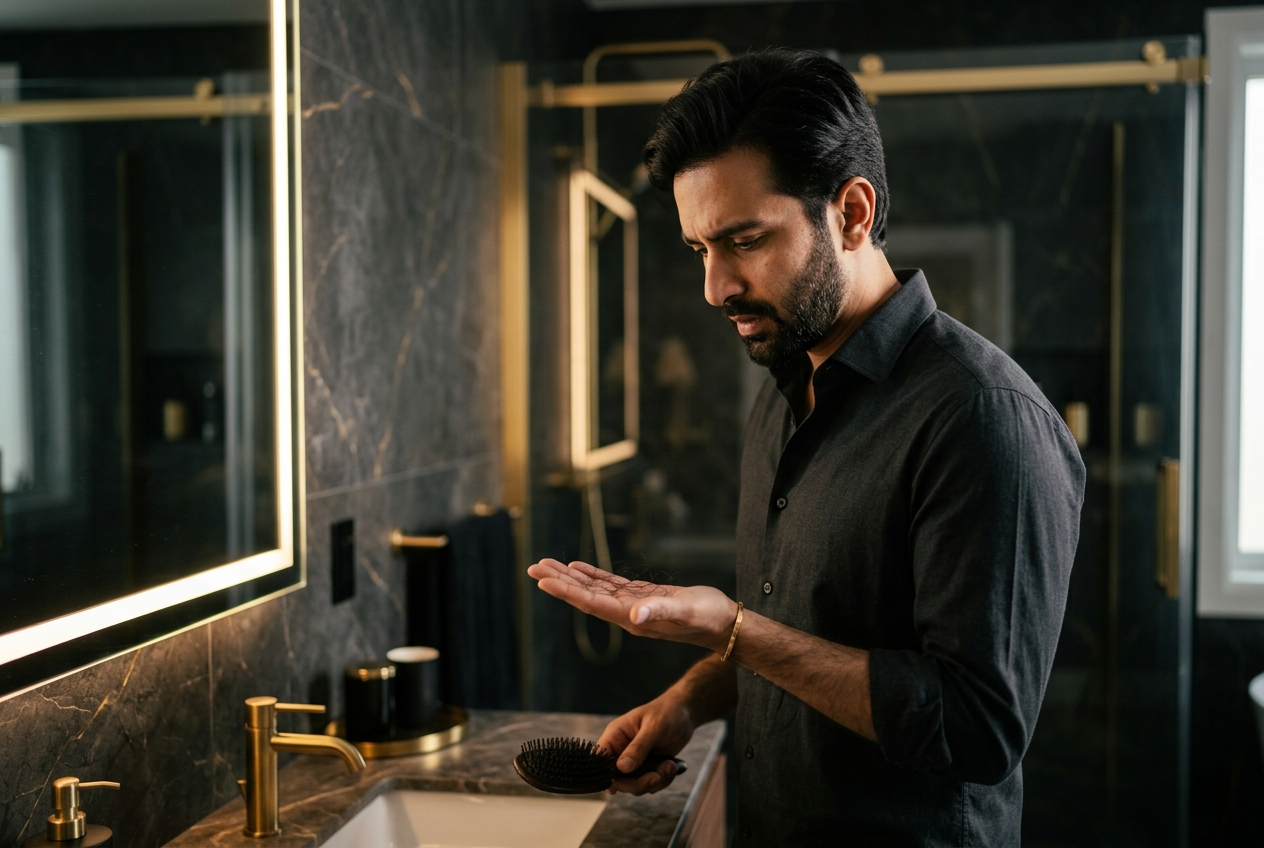
You notice more strands on your pillow. Then on your comb. Then in the shower drain. At first, you ignore it. But slowly, the question becomes impossible to avoid: why is my hair falling so much?
Hair fall is not just a cosmetic concern—it is often a reflection of what is happening inside your body and daily routine. According to the American Academy of Dermatology, losing 50–100 hairs a day is normal. But when shedding becomes excessive, it signals an imbalance that should not be ignored.
The real issue is that most people focus only on the hair itself—not the deeper causes beneath the scalp, lifestyle, and health. Let’s break that down clearly.
What Actually Causes Hair Falling?
Hair fall is rarely caused by a single factor. It is usually a combination of internal and external stressors working together.
1. Stress and Hormonal Disruption
Chronic stress pushes hair follicles into a resting phase called telogen effluvium, leading to sudden shedding weeks later.
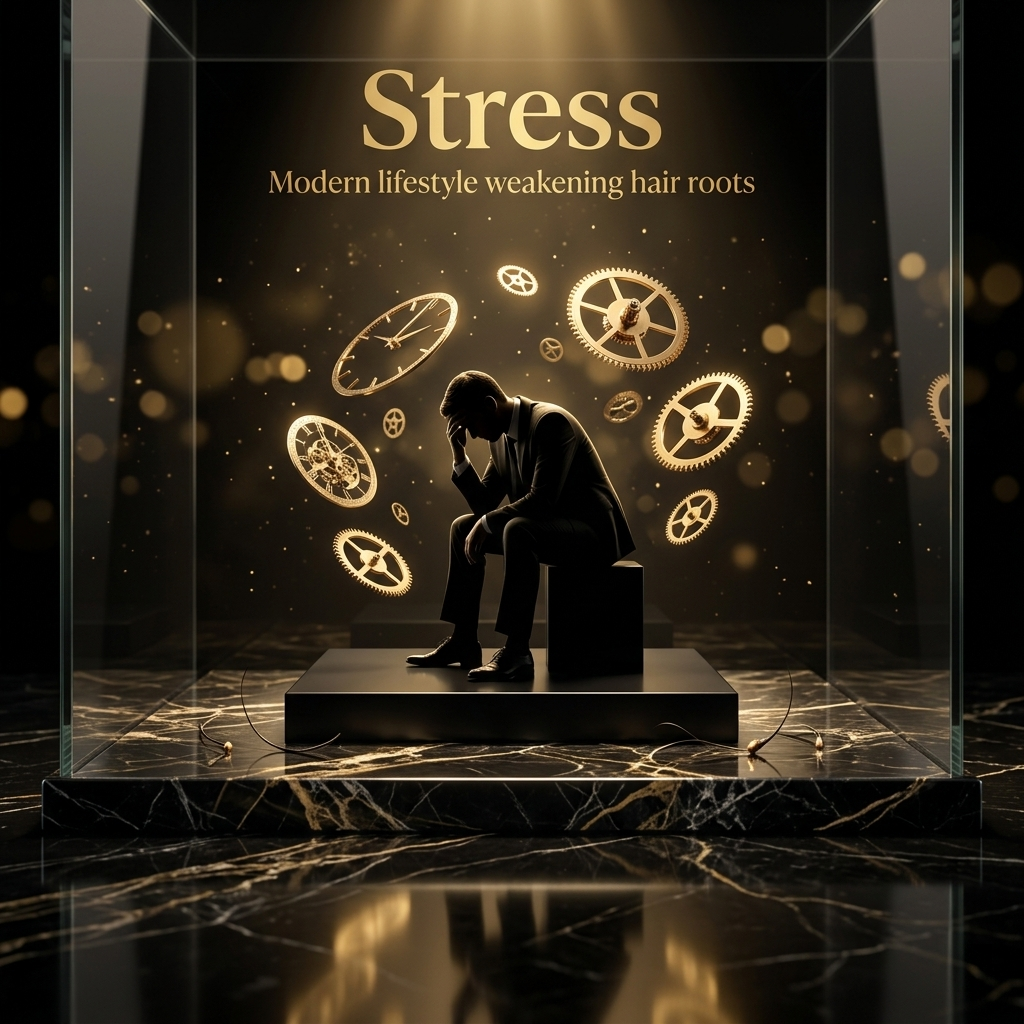
Chronic stress and anxiety push follicles into a premature resting phase.
- Emotional stress
- Sleep disruption
- Anxiety and lifestyle pressure
The NHS confirms that stress-related shedding is one of the most common temporary hair loss conditions.
2. Nutritional Deficiencies
Hair is built from nutrients. When your body lacks them, hair is one of the first areas to suffer.
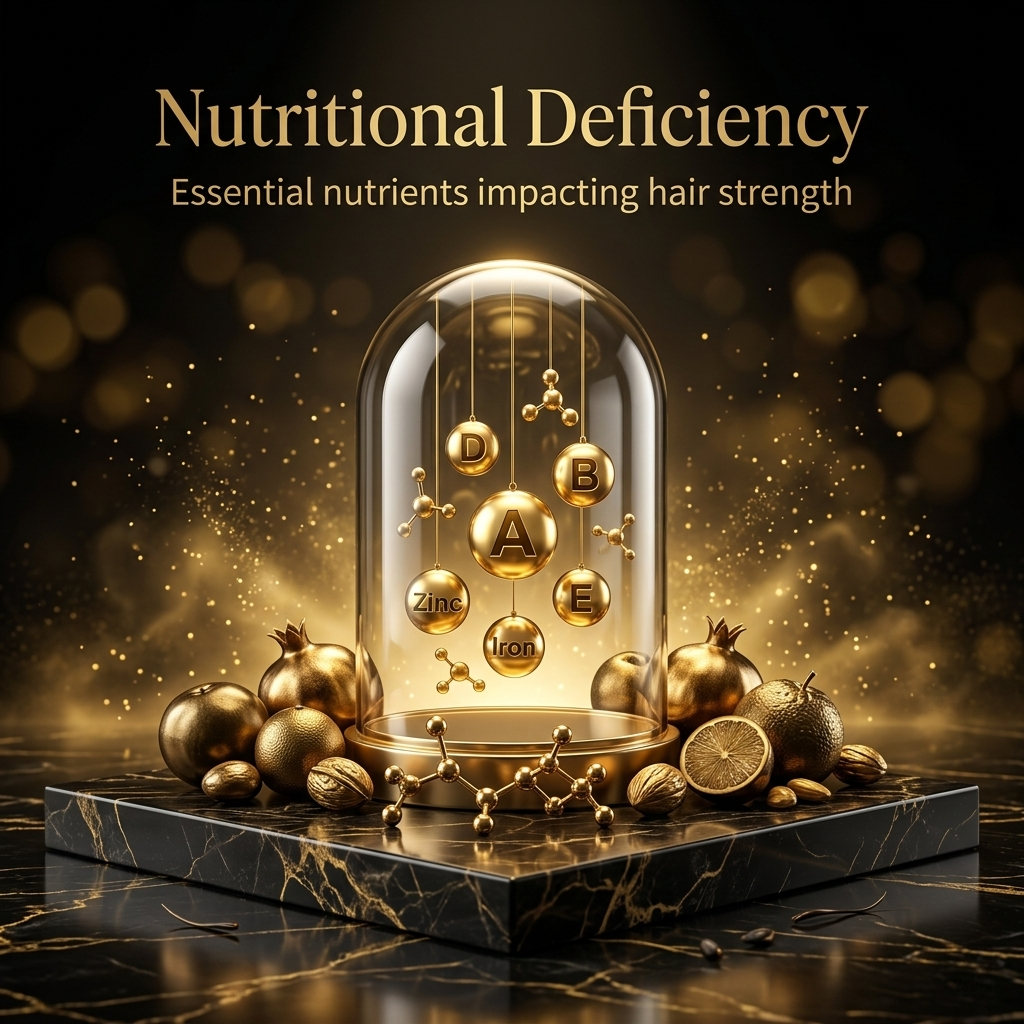
Poor diet and lack of key micronutrients weaken hair structure from within.
Key deficiencies linked to hair falling:
- Iron deficiency
- Vitamin D deficiency
- Protein deficiency
- Zinc imbalance
Without proper nutrition, hair becomes thinner, weaker, and more prone to breakage.
3. Hormonal Imbalance
Hormones regulate the hair growth cycle. Any disruption can lead to noticeable shedding.
Common triggers:
- Thyroid disorders
- Post-pregnancy changes
- PCOS
- Age-related hormonal shifts
These changes affect follicle strength and growth speed.
4. Scalp Health Problems
Most people treat hair, not scalp—but hair grows from the scalp, not the strands.
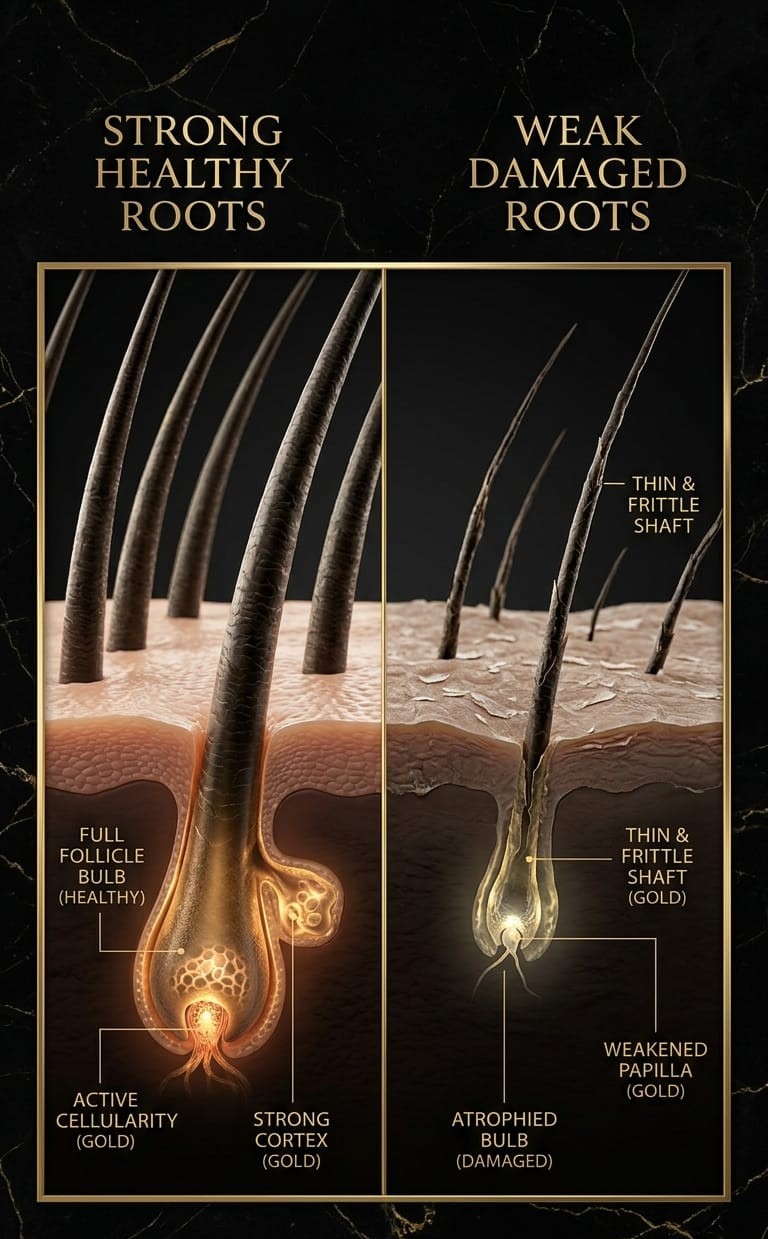
Healthy hair roots require a clean, nourished scalp environment.
A poor scalp environment leads to:
- Clogged follicles
- Excess oil buildup
- Dandruff or inflammation
Healthy hair cannot grow from an unhealthy scalp.
5. Heat Styling and Chemical Damage
Frequent use of straighteners, dyes, and harsh shampoos weakens the hair shaft.
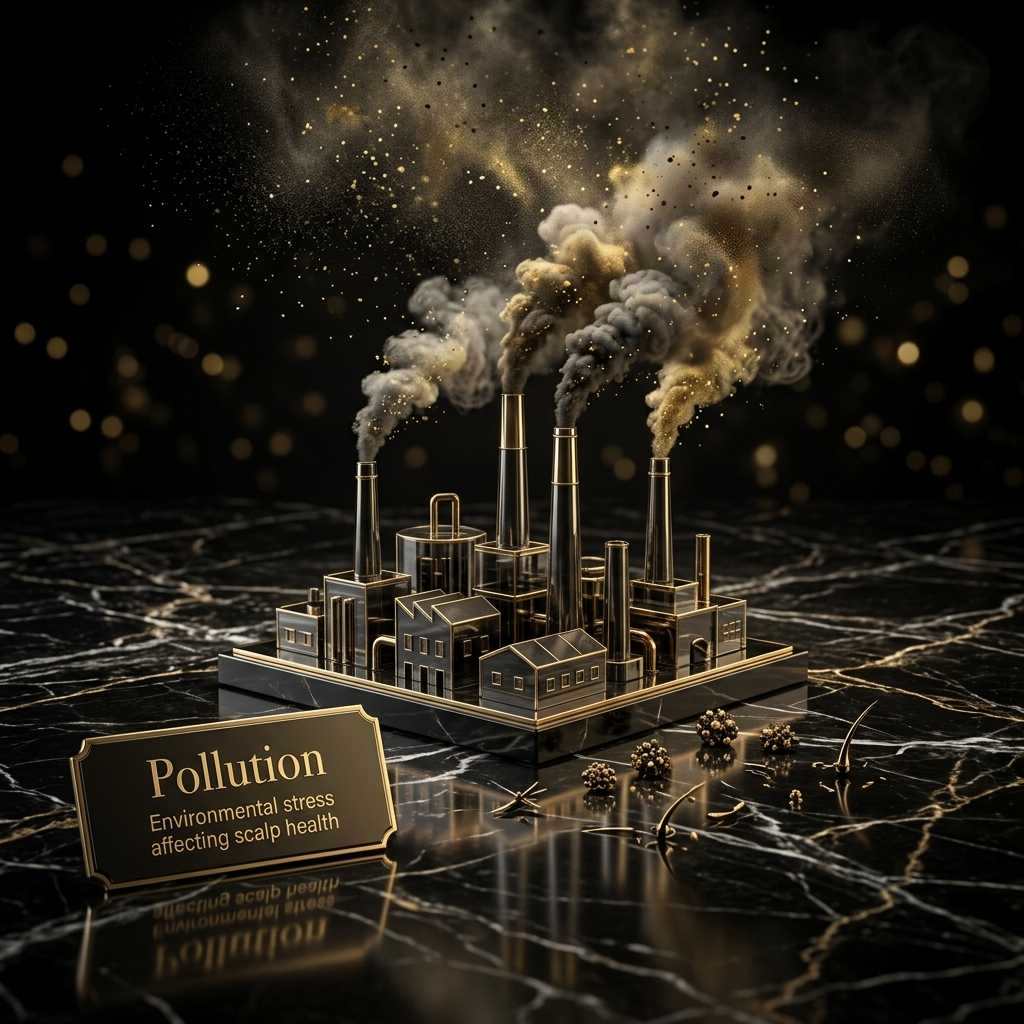
External factors like pollution and harsh treatments contribute to cuticle damage and breakage.
Long-term effects include:
- Cuticle damage
- Split ends
- Breakage before natural shedding
Over time, hair loses elasticity and strength.
Internal vs External Causes of Hair Falling
Understanding the difference helps identify the real root problem.
| Internal Causes | External Causes |
|---|---|
| Hormonal imbalance | Heat styling |
| Nutritional deficiency | Harsh shampoos |
| Stress | Pollution |
| Medical conditions | Chemical treatments |
Most people treat only external causes and ignore internal ones—which is why results often fail.
What Most People Get Wrong About Hair Fall
There’s a lot of noise around hair loss — and a lot of genuinely well-meaning advice that misses the mark. Here are the most common misconceptions worth correcting.
- Only treating hair, not scalp: Hair health begins at the root. Ignoring scalp care means ignoring the problem.
- Using too many products: Layering oils, serums, and shampoos does not fix root causes—it often worsens build-up.
- Ignoring early signs: Excess shedding is not sudden—it builds up silently over time.
Real Solution: A Balanced Approach
There is no single miracle fix for hair falling. Real improvement comes from consistency across three areas:
- Internal health (diet + stress management)
- Scalp environment (clean, nourished scalp)
- External care (gentle, consistent routine)
According to dermatology experts, hair regrowth depends heavily on maintaining a healthy follicle environment—not just topical treatment.
📊 Hair Fall Causes Overview
| Category | Impact Level | Example |
|---|---|---|
| Stress | High | Emotional pressure, sleep issues |
| Nutrition | High | Low iron, poor diet |
| Hormones | High | Thyroid, PCOS |
| Scalp Health | Medium-High | Dandruff, oil buildup |
| Styling Damage | Medium | Heat tools, chemicals |
How Rami Hair Oil Supports Hair Health
While no oil can “magically stop” hair fall overnight, consistent scalp nourishment can significantly improve hair strength over time.
Rami Hair Oil is designed to support:
- Scalp nourishment
- Stronger hair roots
- Reduced breakage
- Healthier hair texture with regular use
Its purpose is not instant transformation—but long-term scalp support as part of a healthy routine.

Dedicated to authentic, long-term scalp nourishment and honest hair care formulations.
Final Thoughts
Hair fall is not just a surface-level issue. It is a signal that something deeper needs attention—whether it is stress, nutrition, hormones, or scalp health.
The key is not panic, but correction. No single solution works alone. But a consistent routine that supports your scalp, nutrition, and lifestyle can gradually restore stronger, healthier hair.
Healthy hair is built, not bought overnight.
If you are serious about improving your hair care routine, start by focusing on your scalp health and consistency. Explore a routine that supports long-term nourishment rather than quick fixes.
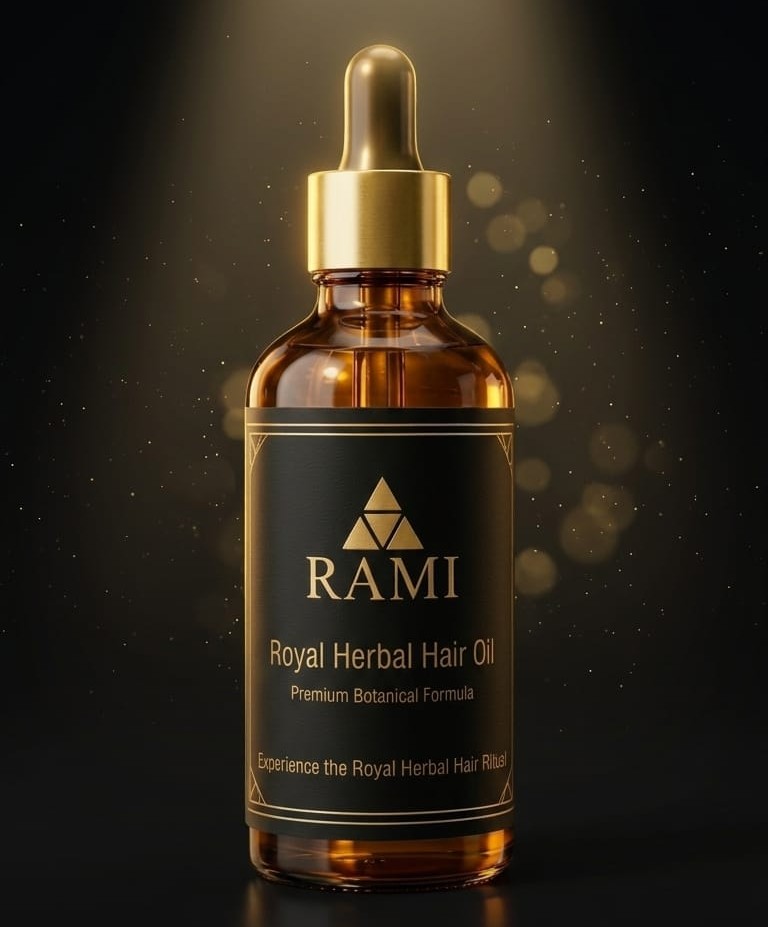
Rami Royal Herbal Hair Oil
₨2,999.00 ₨2,499.00
Cold-infused with precious herbs and nourishing base oils to support scalp health, strengthen roots, and reduce breakage naturally.
- Deep scalp nourishment & root strengthening
- Slow cold-infused traditional herbal formula
- Designed for long-term consistency & results